

Clearer Skin Starts with the Right Light
Physician-supervised IPL photofacial treatments that target sun damage, redness, and uneven tone — without downtime.
Our IPL photofacial uses intense pulsed light to address the discoloration and texture irregularities that accumulate over years of sun exposure, hormonal changes, and everyday life. At Skin Revival at Paragon Personal Healthcare, every treatment is performed under physician supervision — which means you get clinical precision, not a guesswork approach. We serve patients throughout Canonsburg, Peters Township, Washington, and the surrounding South Hills and Washington County communities.
What IPL Photofacial Treats
IPL works by delivering precise wavelengths of light into the skin, targeting pigment and vascular irregularities without damaging the surrounding tissue. The light energy is absorbed by melanin and hemoglobin, causing discoloration to break down and the body to clear it naturally over the following weeks.
IPL photofacial is well-suited for:
- Sun spots, age spots, and freckles
- Facial redness and flushing
- Rosacea-related discoloration
- Broken capillaries and superficial vascular lesions
- Uneven skin tone and dullness
- Early signs of photoaging and sun damage
Because IPL targets both pigment and vascular concerns simultaneously, many patients see improvement across multiple issues in a single course of treatment.
Physician Supervision Makes a Clinical Difference
Most aesthetic clinics offering IPL are staffed by estheticians or laser technicians working without physician oversight. At Skin Revival, Dr. Plute supervises every treatment — and that distinction matters more than it might appear.
Proper IPL treatment requires accurate assessment of skin type, Fitzpatrick classification, and the nature of the discoloration being targeted. Delivering the wrong wavelength or energy level to the wrong skin type can cause hyperpigmentation or burns. With physician oversight, those risks are evaluated before the device is ever turned on.
We also treat active rosacea and vascular lesions — conditions that most aesthetic salons decline to address. Local dermatologists refer patients to us specifically for this reason.
What to Expect from Your IPL Treatment
Step 1: Consultation and Skin Assessment
We begin with a thorough evaluation of your skin type, tone, and the specific concerns you want to address. Dr. Plute reviews your skin history and confirms that IPL is the right modality for your goals — or recommends an alternative if another approach would serve you better.
Step 2: The Treatment Session
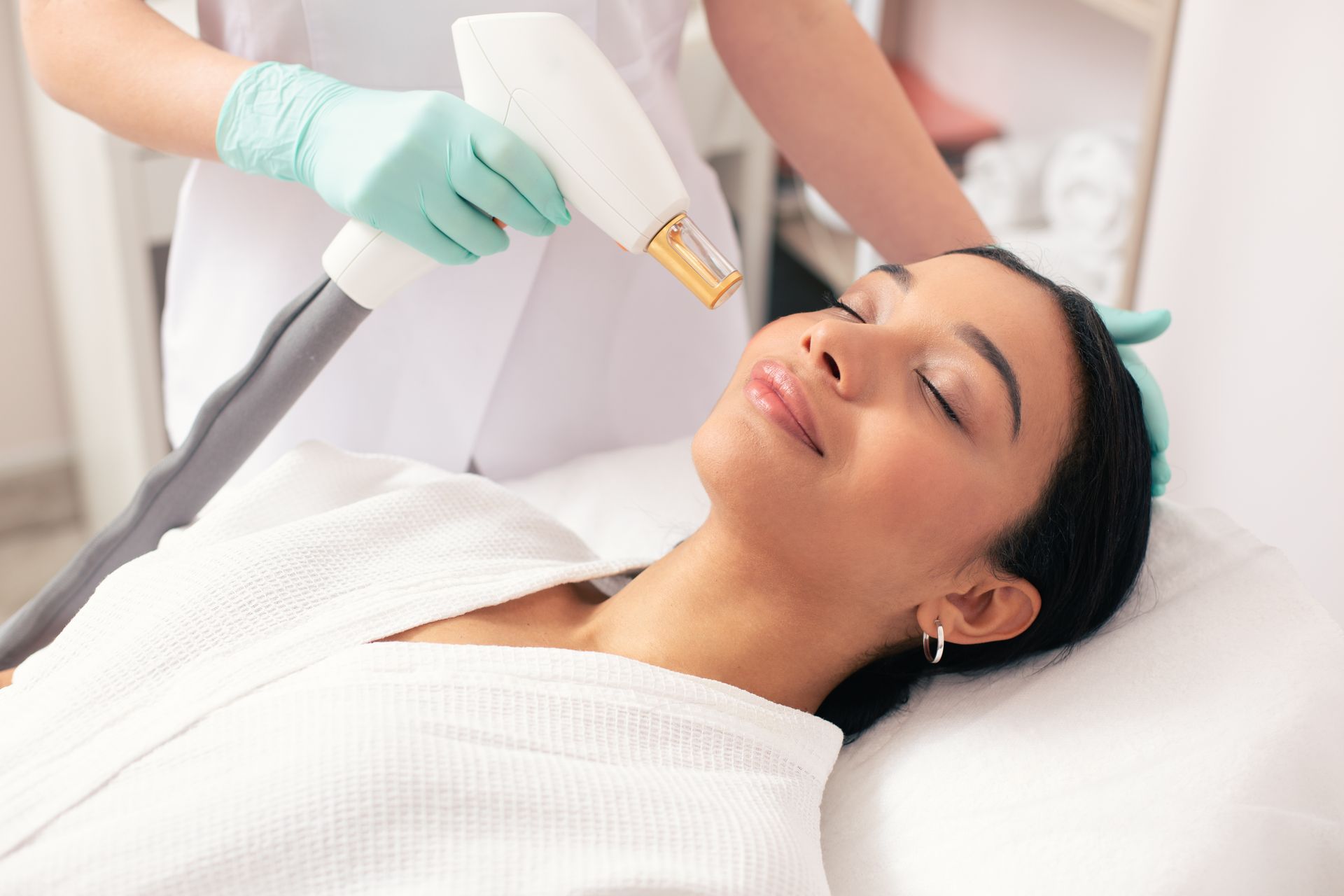
A cooling gel is applied to the treatment area. The IPL handpiece delivers brief pulses of light across the skin — most patients describe the sensation as a light snap or mild warmth. A typical full-face session takes 20 to 30 minutes.
Step 3: Immediate Aftercare
The skin may appear slightly flushed immediately after treatment. Sun spots often darken before they flake away over the following 7 to 14 days — this is the expected process, not a complication. We provide specific aftercare guidance at every appointment.
Step 4: A Series for Best Results
Most patients complete a series of 3 to 5 treatments spaced 3 to 4 weeks apart. Maintenance sessions once or twice a year help sustain results, particularly for patients with ongoing sun exposure or rosacea.
IPL Results: What the Evidence Shows
IPL photofacial has a well-established clinical record across both pigmented and vascular indications. Published research consistently demonstrates meaningful improvement in sun-induced discoloration, facial redness, and overall skin tone following a standard treatment series.
- Studies show a 70–80% reduction in pigmented lesions after a series of IPL treatments in patients with Fitzpatrick skin types I–III
- Vascular improvements — including reduction of facial telangiectasia and rosacea-associated redness — are consistently reported across multiple peer-reviewed trials
- Patient satisfaction rates in clinical literature frequently exceed 80% following a completed IPL series
- Collagen remodeling is a documented secondary benefit, contributing to improved skin texture over time
These outcomes reflect treatments performed under controlled, clinically supervised conditions — the standard we apply at every appointment.
IPL Photofacial at Skin Revival vs. Spa-Based Treatments
The IPL device and the person operating it are not interchangeable variables. Clinical-grade IPL systems deliver more precise energy control than the lower-powered devices common in salon settings — and physician oversight ensures that energy is calibrated to your specific skin type and condition.
At Skin Revival, we use professional-grade IPL equipment and pair treatments with medical-grade skincare, including prescription formulations and compounded options when appropriate. For patients managing active rosacea or vascular conditions, we can coordinate care with your referring dermatologist or primary care provider.
IPL Photofacial: Your Questions Answered
Most patients complete a series of 3 to 5 treatments spaced 3 to 4 weeks apart. Maintenance sessions once or twice a year help sustain results, particularly for patients with ongoing sun exposure or rosacea.
Ready to Address Sun Damage and Uneven Tone?
Step 1: Consultation and Skin Assessment
We begin with a thorough evaluation of your skin type, tone, and the specific concerns you want to address. Dr. Plute reviews your skin history and confirms that IPL is the right modality for your goals — or recommends an alternative if another approach would serve you better.
Step 2: The Treatment Session
A cooling gel is applied to the treatment area. The IPL handpiece delivers brief pulses of light across the skin — most patients describe the sensation as a light snap or mild warmth. A typical full-face session takes 20 to 30 minutes.
Step 3: Immediate Aftercare
The skin may appear slightly flushed immediately after treatment. Sun spots often darken before they flake away over the following 7 to 14 days — this is the expected process, not a complication. We provide specific aftercare guidance at every appointment.
Step 4: A Series for Best Results
Most patients complete a series of 3 to 5 treatments spaced 3 to 4 weeks apart. Maintenance sessions once or twice a year help sustain results, particularly for patients with ongoing sun exposure or rosacea.
FAQ
Frequently Asked Questions
How many IPL sessions will I need?
Most patients complete a series of 3 to 5 treatments spaced 3 to 4 weeks apart. The number depends on the severity of discoloration, your skin type, and your goals. We establish a treatment plan at your initial consultation.Is there downtime after an IPL photofacial?
IPL requires minimal downtime. The skin may appear flushed for a few hours post-treatment, and sun spots will typically darken before flaking off over 7 to 14 days. Most patients return to normal activities the same day.Is IPL photofacial safe for rosacea?
Yes, when performed by a qualified provider. IPL is one of the most effective treatments for rosacea-related redness and broken capillaries. Because rosacea is a medical skin condition, physician supervision is important — both for accurate diagnosis and for selecting the correct treatment parameters.What areas can be treated with IPL?
The face is the most common treatment area, but IPL can also be applied to the neck, chest, hands, and arms — areas that frequently show sun damage and age-related discoloration.How long do IPL results last?
Results from a completed IPL series can last 12 months or longer with proper sun protection. Annual or semi-annual maintenance treatments help sustain improvement, particularly for patients with rosacea or continued sun exposure.Does IPL work on all skin types?
IPL is most effective and safest for Fitzpatrick skin types I through III — fair to medium skin tones. Patients with darker skin tones may be better served by alternative modalities. We assess your skin type at consultation and recommend the appropriate treatment accordingly.
Get Started Today
A clearer, more even complexion is achievable — and it starts with a conversation. Our team will assess your skin, answer your questions, and build a treatment plan around your specific concerns. Call or text us at 724-746-7020, or request a consultation online.